

SPATIAL CONTINUITY FOR PEDESTRIANS AND THE DISABLED
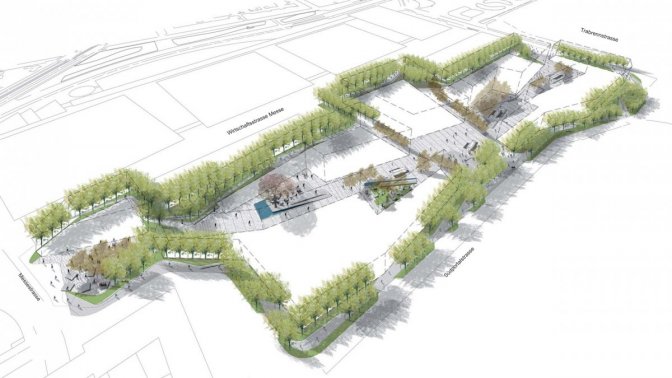
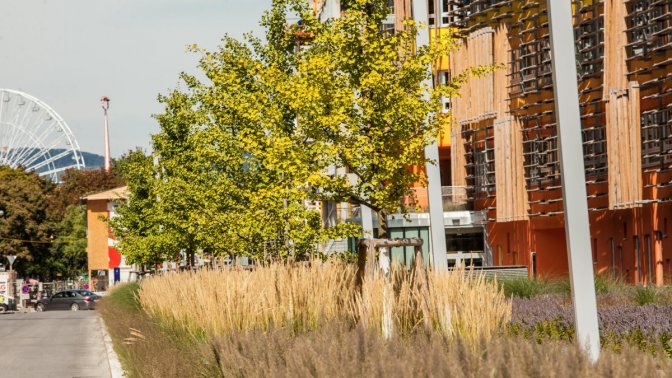
One of the spatial principles that shape the whole Campus is the fluidity and continuity of its outdoor public spaces. This principle suggests various public space functions and uses, triggering numerous atmospheres and experiences while also ensuring visual and physical accessibility between one place and another, as well as encouraging communication and interaction between users.
The same spatial continuity can even be felt inside some faculty and department buildings, where various indoor architectural objects connect with the shared Campus outside, contributing to an integral spatial reality.
This continuity relies heavily on accessibility requirements such as avoiding steps and designing floor surfaces with slopes of less than 4%, which together mean that more than 23,000 students can freely move around the Campus.
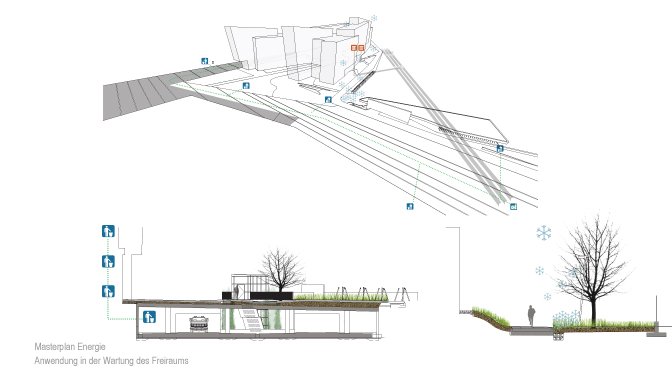
In that sense, the signage of the various paths plays a major role in the articulation of the different flows, especially for those with visual impairments. Raised ground indicators have been provided everywhere, as well as tactile infographics with messages in Braille, which enable those that need them to find their way around.
Cycling on Campus
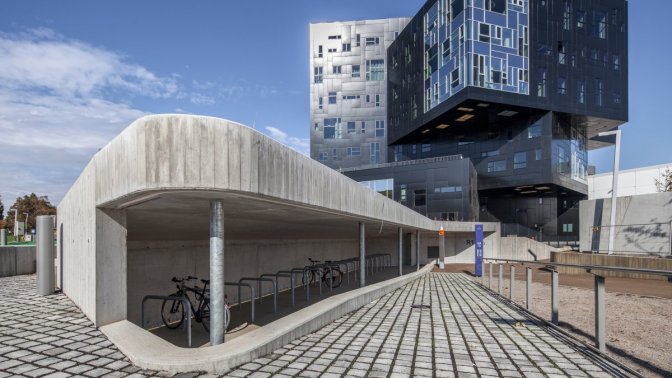
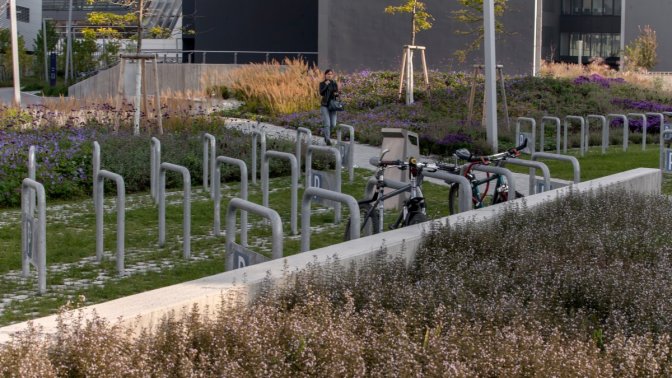
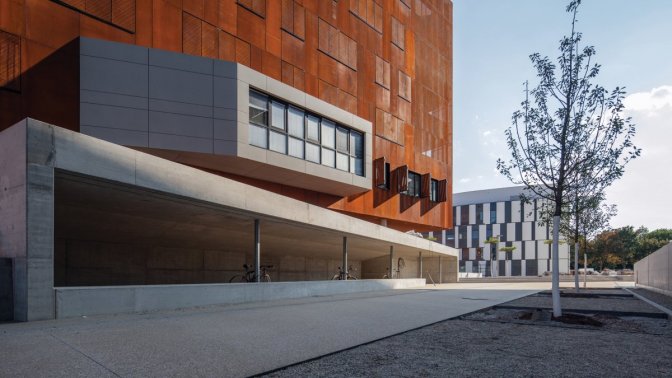
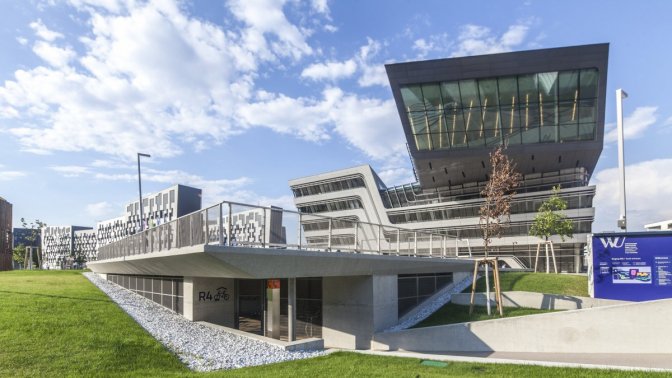
Given this mode of transport’s increasing importance and popularity in Vienna during recent years, special attention has been given to the needs of bicycle users. The flow of cyclists is directed around the outside of the site, in a circuit linked to Vienna’s main urban cycle-path network, and integrated with the Campus core by way of open and closed bicycle parking areas, always located close to the various buildings.
In total 998 cycle spaces, 668 closed and 330 open, were planned and built all around the university.
Santiago Sánchez Guzmán, BUSarchitektur
Cycle spaces
Mobility Campus WU


