


Multisectoral infrastructure
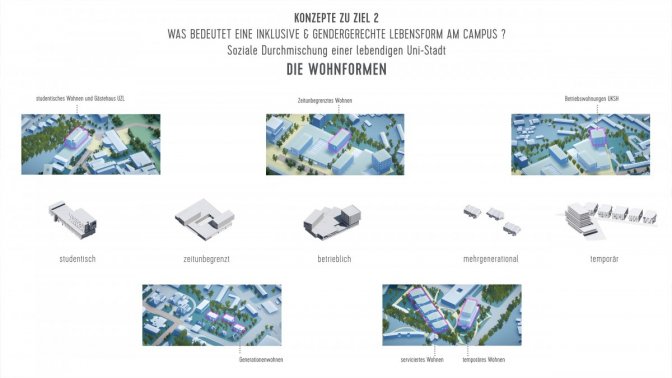
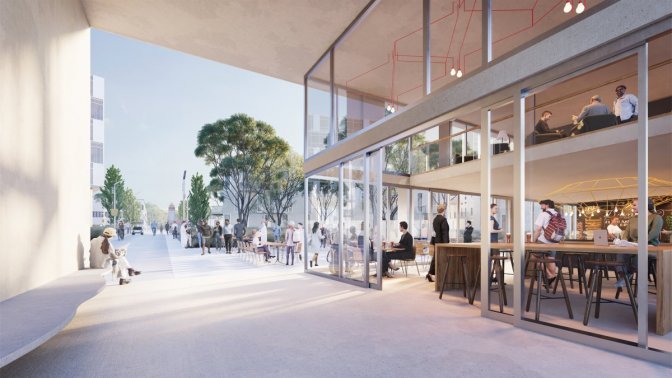
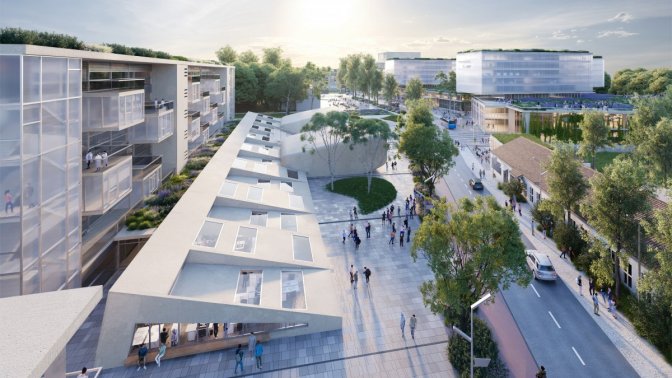
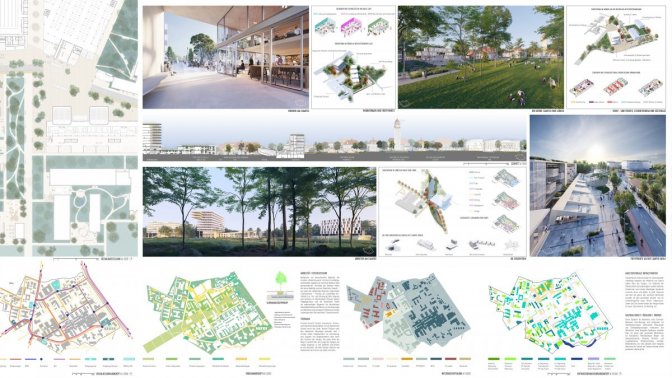
Flexibility as the top priority for quality of life: A wide range of residential and living options find a place on campus. An ambience of publicity and liveliness lends identity, and attractiveness and allows lively exchange between inside and outside. Activities alternate or occur in parallel at any time of day and throughout the year, providing a sense of security. Open ground floor zones and sub-centres provide the necessary space for sports, gastronomy, co-working, etc.
Sustainability/ecology/energy
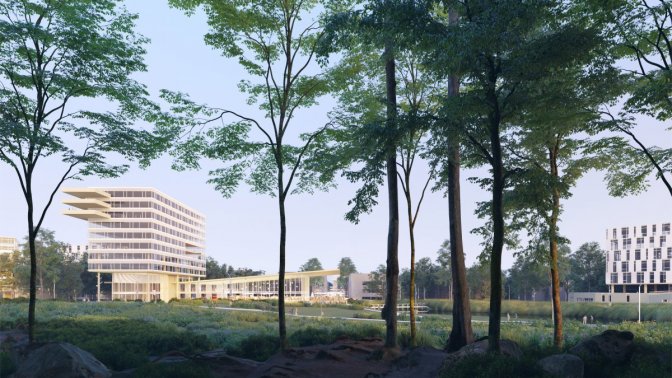
Green systems as building blocks, not ornaments: maximum solar use is combined with green roof uses. Extensive plantings and building greening improve the microclimate, high compact building structures create space for green or permeable surfaces. An energy grid, heat pumps, rainwater and wastewater utilisation, efficient traffic and logistics planning, demand assessment of future media flows, etc. are all integral building blocks of the future at the campus along its entire life cycle.
Mobility / Access
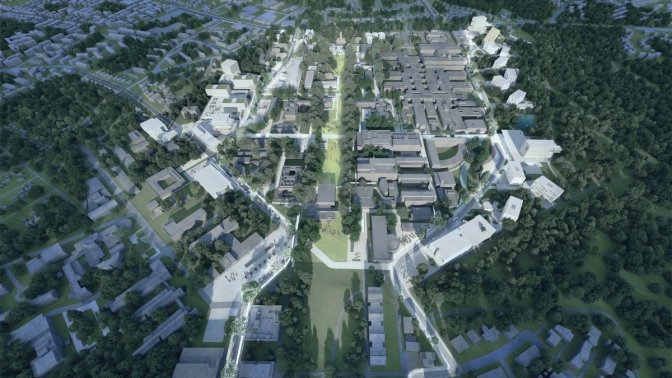
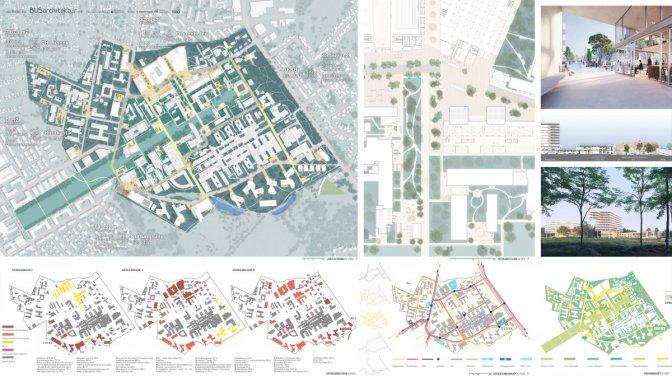
Multi-option with a human scale: The longed-for „mobility turnaround“ is operationalised through diverse, multimodal offers at several mobility hubs. Within the area, active mobility and public transport - with an e-quarter bus complementing the urban bus lines - have priority; the necessary motor vehicle traffic (including supply and disposal) travels slowly and partly in mixed traffic (shared space). Pedestrians and cyclists will find dense paths with shaded areas and squares. A ring road provides access to the proposed car parks and urban interventions. (theme centres).
Open space
Open space needs structure: innovation, action and inspiration miles run as thematic axes through the area, whose surfaces are designed according to clearly defined uses. The green centre of the ring is both the heart and lungs of the campus and a quiet counterpoint to the busy sub-centres at the institutes, which give the campus its identity and internal and external attractiveness.
Campus Lübeck
future vision of education


